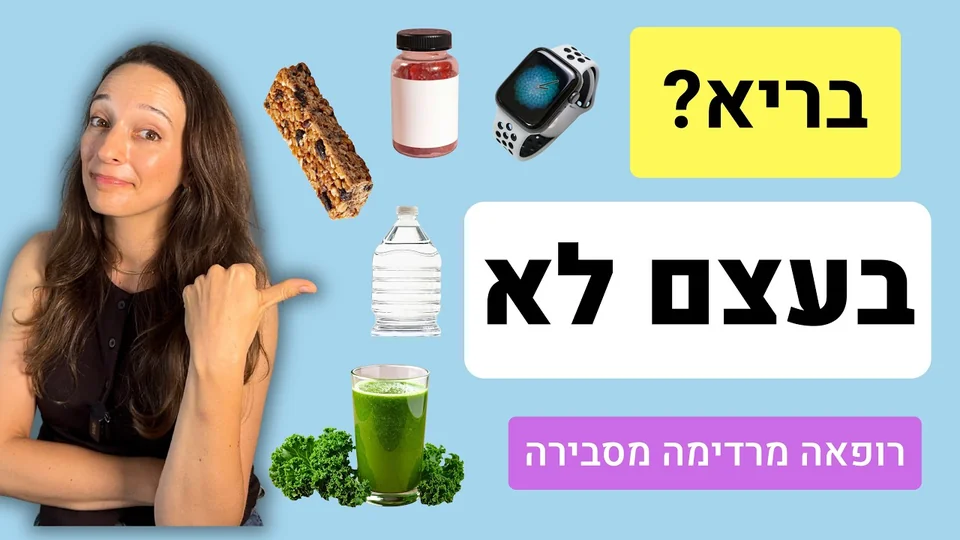
Healthy habits? 10 things worth thinking twice about
Ten habits that look healthy but may be unnecessary or harmful when taken out of context or to excess—from water and supplements to sleep, screens, and smartwatches.
Key points
- A habit that sounds healthy is not automatically helpful in every situation; need, dose, and context matter.
- Healthy eating does not require detoxes, eliminating all carbohydrates, or automatically replacing sugar with sweeteners.
- Strength training matters for preserving muscle and bone, so cardio should not be the only form of exercise.
- A consistent wake time and screen-free breaks support sleep and concentration better than trying to catch up entirely on weekends.
- Smartwatch metrics can help as broad trends or during exercise, but they are imperfect and should not become a source of anxiety.
Chapters
- 00:00 Introduction
- 00:30 Habit 1: Drinking lots of water when you are not thirsty
- 01:08 Habit 2: Vitamins and natural supplements
- 02:14 Habit 3: Detoxes
- 03:00 Habit 4: Low-fat snacks
- 03:54 Habit 5: Cutting out carbohydrates
- 04:42 Habit 6: Replacing sugar with sweeteners
- 05:30 Habit 7: Doing only cardio
- 06:05 Habit 8: Catching up on sleep on weekends
- 06:45 Habit 9: Scrolling to rest
- 08:21 Habit 10: Measuring everything
Frequently asked questions
What is strength training?
What is strength training? In the video, it means resistance exercise that helps build muscle, limit bone loss, and improve insulin resistance, so it should be combined with cardio rather than omitted.
How much water should you drink a day?
How much water should you drink a day? The video recommends using thirst as a guide instead of forcing down huge quantities without a reason. Extremely excessive intake may dilute blood salts and disrupt normal cell function.
Can you catch up on sleep?
Can you catch up on sleep? The video explains that sleeping longer on weekends does not replace a stable, predictable sleep schedule; it is better to wake at a similar time daily and keep weekend wake time within about two hours of weekdays.
Is a multivitamin healthy?
Is a multivitamin healthy? The video says a supplement makes sense with a proven deficiency or when a vitamin source is absent from the diet. Otherwise, stored vitamins may accumulate and supplements may cause harm or interfere with medication.
Are artificial sweeteners healthy?
Are artificial sweeteners healthy? The video does not present them as an automatically healthy solution: they may increase hunger, disrupt satiety, and train the palate toward intense sweetness, so it recommends getting used to less sweetness.
What is a detox?
What is a detox? In the video, it refers to trying to remove toxins with juices, but the liver and kidneys already do that work and there is no medical evidence that juice detoxes remove toxins from the body.
Full transcript
Show full transcript
Some habits sound genuinely healthy and smart, but in practice they can do more harm than good. Today we will discuss ten habits you may think are healthy, but which—when done without a reason, to excess, or without understanding the science—can actually damage your health.
I'm Dr. Elisheva. Let's begin.
## Habit 1: Drinking lots of water when you are not thirsty
Our bodies are impressive. When the body senses that fluid volume in the blood is low, it releases a hormone that creates thirst. That is how it helps regulate the amount of fluid in the body. So feeling thirsty is the signal to drink water.
You do not need to force down four liters. Extremely excessive water intake is unnecessary and may even be harmful by disturbing electrolyte balance—diluting the salts in the blood—and interfering with normal cell function.
The genuinely healthy habit is to drink when you are thirsty.
## Habit 2: Vitamins and natural supplements
If you have a nutritional deficiency, or you know you do not eat enough of a vitamin source—for example B12 in a vegan diet—then of course, take the appropriate supplement.
Otherwise, there is no reason to take three multivitamins every day “just in case.” The body can store vitamins A, D, and E. Taking too much can make them accumulate to toxic levels and cause harm. Other vitamins that the body does not store are simply excreted in urine when there is too much, while the body keeps what it needs. A multivitamin without a deficiency mostly gives you more expensive urine.
As for natural supplements, “natural” does not mean “safe.” They can be harmful at high doses, interfere with medication, increase bleeding, and damage the liver. Studies show that around 20% of drug-induced liver injury cases in the United States are caused by dietary and “natural” herbal supplements.
The genuinely healthy habit is to take a supplement only when there is a proven deficiency or when you do not eat a source of a particular vitamin at all.
## Habit 3: Detoxes
Let's make this clear: you do not need a detox, because fortunately you have kidneys and a liver. You are almost insulting them when you drink a huge green juice full of kale and spirulina and imagine it is better than the work they already do.
A detox juice is simply a lot of vegetables compressed into a drink. Instead of eating, chewing, and becoming full from a meal, you drink it, lose a large share of the dietary fiber, and often consume a lot of sugar. There is no medical evidence that these drinks provide a benefit or remove toxins from the body. Toxins are handled by the liver and kidneys.
The genuinely healthy habit is simply to eat well, not smoke, avoid alcohol, sleep well at night, and let the kidneys and liver do their thing.
## Habit 4: Low-fat snacks
Low-fat foods often contain more sugar, starch, and high-fructose corn syrup. Many so-called healthy snacks are also packed with sugar. Do not be fooled by a snack's “healthy” appearance; it is often unhealthy processed food. To know what is really in it, read the ingredients directly. If sugar is among the top five ingredients, it is not healthy. Brown sugar is not healthier than white sugar; it just looks prettier.
There is also a health-halo effect. Research in nutritional psychology shows that people tend to consume up to 35% more calories from a food when it is labeled “healthy” or “low fat,” simply because they perceive it as less fattening.
The genuinely healthy habit is to read the ingredients and avoid processed foods with added sugar as much as possible.
## Habit 5: Cutting out carbohydrates
You know the idea: remove every carbohydrate because carbohydrates are the enemy. But the enemy is refined, processed carbohydrate. Quinoa, buckwheat, potatoes, bulgur, and other whole, unprocessed foods can absolutely be part of a healthy diet. They contain fiber and vitamins and raise blood sugar more slowly and gradually.
Refined carbohydrates such as white bread or white pasta cause sharp spikes in blood sugar. This is unhealthy because it increases insulin resistance, may damage cells over the long term, and is followed by a sharp drop in blood sugar—the sudden, extreme hunger that can make you feel you must have something sweet immediately.
The genuinely healthy habit is to avoid refined white carbohydrates.
## Habit 6: Replacing sugar with sweeteners
You may already know that sweeteners are not necessarily the healthiest substances. The tongue's sweet-taste receptors tell the brain that sugar is arriving, but then it does not. This can increase hunger, disrupt satiety, and make you want real sugar afterward.
Sweeteners also flood our receptors with an intensely sweet taste and can make naturally sweet foods, such as fruit, seem less appealing. Some studies also show that sweeteners such as sucralose and aspartame alter the composition of gut bacteria and contribute to increased insulin resistance.
The genuinely healthy habit is to get used to eating less sweetness.
## Habit 7: Doing only cardio
Cardio is excellent, but resistance training is what helps keep the body young and healthy by building muscle mass. Starting around age 30, the body naturally loses between 3% and 8% of its muscle mass each decade, and resistance training is the only tool that prevents and compensates for this loss. It also helps prevent bone loss.
It may feel more boring, but it is critical over the long term and reduces the frequency of fractures later in life. Strength training also improves insulin resistance.
The genuinely healthy habit is to make strength training a central part of your exercise routine.
## Habit 8: Catching up on sleep on weekends
It sounds logical: you are tired, so you will catch up over the weekend. But the body prefers stable, predictable sleep cycles. One of the best things you can do to avoid fatigue is wake up at the same time every day—including weekends. It is unpleasant, but it works.
A large difference between weekday and weekend wake times is called social jetlag, and it is associated with weight gain, chronic fatigue, and insulin resistance.
The genuinely healthy habit is to set a weekend alarm no more than two hours later than your weekday wake time.
## Habit 9: Scrolling to rest
You are in the middle of something and decide to take a short break, then immediately reach for your phone to scroll through TikTok, Instagram, or something else. It may feel like rest, but it is not. Your brain is still working and is flooded with rapid content, comparisons, and notifications that erode your ability to pay attention.
The prefrontal cortex is involved in decision-making, attention, and concentration. When we are exposed to rapid content and process new information every few seconds, we tire it and impair our ability to focus later in the day.
Constant exposure to rapid stimuli—scrolling, short videos, and alerts—also makes the brain's reward system release dopamine frequently in a pattern of variable, unpredictable rewards, much like a casino slot machine. This keeps the brain continuously aroused and accustomed to instant rewards. Over time, it makes concentration harder, lowers tolerance for boredom, and makes slower real-life activities such as reading, work, or conversation feel less interesting.
Doing this first thing in the morning is especially harmful because it sets the tone for the day and makes deep, challenging work harder. It is also especially harmful before sleep: blue light delays the release of melatonin, which tells the body it is time to sleep, while rapid stimulation keeps the brain from calming down.
The genuinely healthy habit, when you want to rest, is to take a walk, listen to music, or simply sit and do nothing. Yes, that is a thing.
## Habit 10: Measuring everything
Your watch measures heart rate variability, oxygen saturation, and seemingly everything else—but those measurements may not be worth the anxiety they create.
When I first got an Apple Watch and used it to measure my sleep, I woke feeling refreshed, but the watch told me I was actually very tired. There is now a scientific name for an obsession with perfect sleep and the anxiety around it: orthosomnia. It is unnecessary.
If you have an arrhythmia or heart problem, tracking heart-rate regularity can be useful. During exercise, a watch can help you reach a target heart rate. But when you become anxious because your heart-rate variability is slightly lower than yesterday or your average stride length has shortened, it is no longer contributing anything useful. Thousands of factors affect each metric, and the measurement itself is imperfect and can be wrong.
The genuinely healthy habit is to track measurements that truly matter for your medical background, to view them as broad trends, or to use them during exercise. Step counts can help if they encourage you to walk more—but avoid getting trapped in an anxiety loop created by too much information.
Related videos

How to lower cholesterol and triglycerides: changes that really work
How should you interpret a lipid panel, and what really lowers cholesterol and triglycerides? An evidence-based guide to LDL, HDL, ApoB, six lifestyle changes, and when medication is needed.

Protein: 8 myths you should stop believing (doctor explains)
How much protein do you really need, and does more always build more muscle? Eight myths about protein intake, powders, post-workout timing, plant sources, collagen, and kidney health.

Why are you tired all the time? 7 reasons and how to fix them
Seven common reasons for persistent tiredness—from poor-quality sleep, caffeine, and diet to stress and medical causes—plus practical steps that may help restore your energy.

Intermittent fasting: is it really healthy, and who is it not suitable for? (Doctor explains)
Intermittent fasting can help reduce food intake and support weight loss, but it is not a miracle diet. An evidence-based guide to 16:8 fasting, autophagy, metabolic health, risks, and getting started safely.

Magnesium: who really needs a supplement, which type, and when can it be dangerous?
Magnesium is essential, but not everyone needs a supplement. An evidence-based guide to deficiency, sleep, muscle cramps, migraines, supplement types, dosing, and safety.

Blood tests: how to read a complete blood count (CBC), line by line
Got CBC results with values flagged in red? A line-by-line guide to what each value means - red cells, white cells, and platelets - when to pay attention and when you can simply relax.

Blood tests: how to read blood chemistry (sugar, kidneys & more)
Got blood-test results with values flagged in red? Part 2 of the series explains blood chemistry line by line - glucose (sugar), electrolytes (salts), and kidney function - when to pay attention and when you can simply relax.